

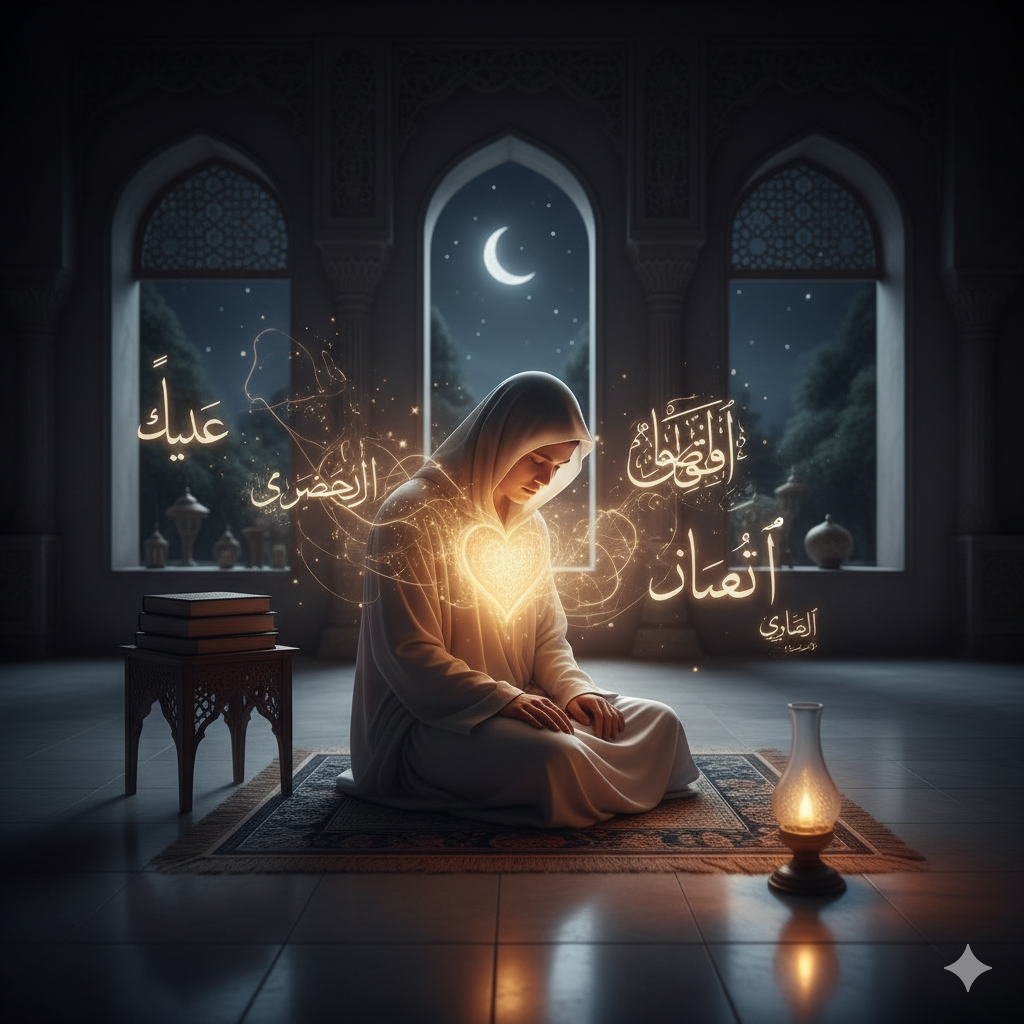
Introduction: What is Islamic Spirituality?
Islam is often perceived merely as a religion of “rules and laws,” but its very soul resides in its Ruhaniyyat (Spirituality). Islamic Spirituality, also known as Tasawwuf (Sufism) or Ihsan (Excellence), is the inner path that leads an individual closer to God (Allah). It is not limited to mere performance of Salat (prayer), Sawm (fasting), or Zakat (charity); rather, it is about sincerity of the heart, purity of intentions, and the constant awareness of Allah’s Presence.
If Shari’ah (Islamic law) is the body, then Ruhaniyyat is its soul.
1. The Foundation of Spirituality: Ihsan (Excellence)
The foundation of Islamic spirituality rests upon the concept of Ihsan. Ihsan was famously defined by the Prophet Muhammad (peace be upon him) in a well-known Hadith:
“Ihsan is to worship Allah as if you see Him, and if you cannot achieve this state of devotion, then know that He certainly sees you.”
This definition illustrates that spirituality is the act of connecting external actions with inner consciousness. To achieve this state of Ihsan, spiritual methodologies (Ruhaniyyat) are employed.
2. Pillars of Spirituality: Inner Disciplines (Tazkiyah)
To attain inner peace and closeness to Allah, Islamic spirituality emphasizes several key practices:
🌟 Tazkiyah al-Nafs (Purification of the Self)
This is the most critical step in the spiritual journey. It means purifying the Nafs (Ego/Lower Self) from vices such as arrogance, greed, envy, and worldly attachment. This requires an individual to constantly examine their intentions and ensure that every action is performed purely for the sake of Allah’s pleasure.
🧠 Dhikr and Muraqabah (Remembrance and Contemplation)
- Dhikr (Remembrance): This is the practice of constantly remembering Allah, whether with the tongue or the heart. Continuous repetition of phrases like “La Ilaha Illallah,” “Allah Hu,” or “Subhan Allah” illuminates the heart.
- Muraqabah (Contemplation/Meditation): This is a quiet state where the seeker separates their heart from the noise of the world to reflect upon Allah’s Greatness and their own responsibilities. It is a form of Tafakkur (contemplation) that leads to higher spiritual knowledge (Ma’rifah).
🙏 Tawbah and Muhasabah (Repentance and Self-Accountability)
It is natural to make mistakes on the spiritual path. Tawbah (repentance) and Muhasabah (self-reckoning) are the processes by which an individual recognizes their faults, seeks forgiveness from Allah, and resolves to improve in the future. This practice prevents the heart from becoming burdened by sin.
3. Sufism (Tasawwuf): The Organized Path of Spirituality
Sufism is the organized and historical path of Islamic spirituality that has evolved over centuries.
| Goal of Sufism | Meaning |
| Fana (Annihilation) | The annihilation of the human ego and worldly desires into the Will of Allah. |
| Baqa (Subsistence) | The permanent life attained in the Divine Attributes after passing through the state of Fana. |
| Wasl (Union/Closeness) | Achieving the highest spiritual state of proximity and connection with Allah. |
Sufi masters and their Silsilah (Orders), such as the Chishtiyyah, Naqshbandiyyah, and Qadiriyyah, emphasize Inner or Esoteric knowledge (Batin) alongside the Outer or Exoteric knowledge (Zahir).
4. The Impact of Ruhaniyyat: Inner Peace and Outer Conduct
Islamic spirituality is not just an internal experience; it has a profound effect on an individual’s external life:
- Integrity: A person whose heart is aware of Allah’s Presence remains honest in all circumstances, regardless of whether anyone is watching.
- Humility (Tawadhu): Spiritual development leads a person to realize that everything is a gift from Allah. This eliminates arrogance and fosters profound humility.
- Service (Khidmah): An individual who loves Allah also loves His Creation. Spirituality inspires acts of service and altruism toward humanity and the environment.
Conclusion: Living in the Light of the Heart
Islamic Spirituality is a way of life, not merely a set of religious rituals. It teaches us that our true world lies within us. Truly spiritual individuals are those who, while living in the world, remain detached from its superficial allure. They remember Allah with every breath, and their hearts are illuminated by the light of Divine Love.
This journey can be long and challenging, but its ultimate fruit is true and lasting inner peace, which is the greatest blessing in this world and the Hereafter.