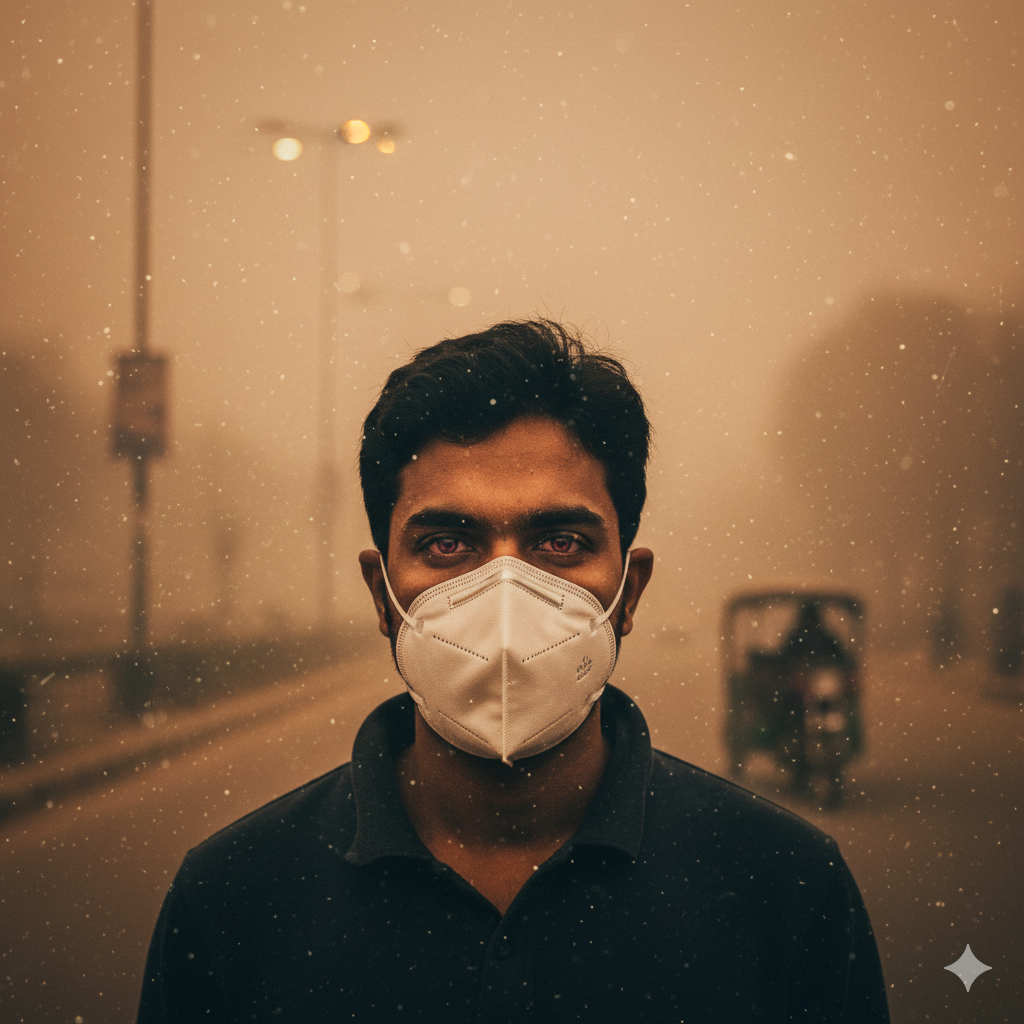

Lahore’s winter brings welcome relief from the summer heat, offering pleasant, cool weather perfect for cozy evenings. However, for many Lahoris, this season also marks the return of the dreaded “winter sniffles” a cycle of sneezing, congestion, and watery eyes that can feel worse than any common cold. If you find yourself reaching for tissues and struggling to breathe clearly, you’re likely dealing with winter allergies.

💨 The Unique Triggers of Lahore’s Winter Allergies
Unlike spring or monsoon, where outdoor pollen is the main culprit, winter allergies in Lahore are often dominated by indoor allergens and the city’s notorious smog.
1. The Smog Factor (Outdoor Culprit)
Lahore frequently experiences dangerously high levels of smog in the colder months (typically October to February). This is a mix of smoke, dust, and tiny particulate matter (PM2.5) trapped close to the ground due to low temperatures.
- Irritation: These microscopic pollutants are highly irritating to the respiratory tract, mimicking and worsening traditional allergy symptoms like coughing, wheezing, and sinus pressure.
- Asthma Flare-ups: For those with pre-existing conditions like asthma, the smog can be a severe trigger for attacks.

2. Indoor Allergens (The Hidden Culprits)
When the weather gets cold, we seal our doors and windows to keep the warmth in. This lack of ventilation traps allergens inside, causing them to concentrate and recirculate.
- Dust Mites: These microscopic organisms thrive in warm, humid environments, especially in bedding, carpets, and upholstered furniture. Since we spend more time indoors and use more blankets, exposure dramatically increases.
- Pet Dander: As pets also spend more time inside, the tiny flakes of dead skin they shed (dander) become more prevalent in the air.
- Mold: While often an outdoor allergen, indoor mold can grow in damp areas of the home, such as bathrooms, kitchens, or under leaks, and its spores circulate through the heating system.

Allergy vs. Cold: How to Tell the Difference
It can be tough to distinguish between a cold and an allergy, especially when flu season is also in full swing. Here’s a quick guide:
| Duration | Lasts as long as you’re exposed to the allergen (weeks or months) | Typically lasts 3 to 7 days |
| Fever/Body Aches | Rare | Common |
| Nasal Discharge | Usually thin, clear, and watery | Can be watery, thick, or yellowish |
| Itching | Severe itching in the nose, eyes, or throat is common | Rare or mild |
| Onset | Symptoms appear immediately after exposure | Symptoms appear 1-3 days after infection |
✅ Your Winter Allergy Survival Guide
You don’t have to suffer through the entire winter. Here are key steps to manage allergies in Lahore:
- Air Filtration is Key:
- Invest in a HEPA (High-Efficiency Particulate Air) filter for your room. This is crucial for filtering out tiny smog particles and indoor allergens like dust mites and dander.
- Change the filters in your air conditioner/heating system regularly.

Tackle Dust Mites:
- Wash all bedding (sheets, pillowcases, blankets) weekly in hot water (at least $54^{\circ}C/130^{\circ}F$) to kill dust mites.
- Use allergy-proof covers on mattresses and pillows.
- Reduce or remove carpets and heavy drapes, which trap dust.
Control Indoor Humidity:
- Use a dehumidifier to keep the humidity level in your home below 50%. This discourages the growth of dust mites and mold.
Manage Smog Exposure:
- Check daily air quality index (AQI) reports. Limit outdoor activity significantly on days when the AQI is dangerously high.
- Wear a high-quality mask (like an N95 or KN95) when you must go outside during heavy smog to filter out particulate matter.