

IHC Judges Transfer Case: Five Judges Challenge Fixing of Intra-Court Appeal Before Federal Court of Claims
In a significant development within Pakistan’s judicial landscape, five judges of the Islamabad High Court (IHC) have filed an intra-court appeal (ICA), challenging the Supreme Court’s earlier ruling that upheld the transfer of three judges to the IHC. The move has intensified debate on judicial independence, seniority, and the constitutional limits of administrative powers over the higher judiciary.
Background: How the Controversy Began
Earlier this year, three judges from different high courts were transferred to the Islamabad High Court:
Justice Sardar Muhammad Sarfraz Dogar (Lahore High Court)
Justice Khadim Hussain Soomro (Sindh High Court)
Justice Muhammad Asif (Balochistan High Court)
On June 19, a five-member constitutional bench of the Supreme Court delivered a 3–2 majority verdict, declaring these transfers constitutional and lawful. The bench also referred questions of seniority to the President of Pakistan for final determination.
The decision, however, has now been challenged by sitting judges of the IHC through an intra-court appeal.
Who Filed the Appeal?
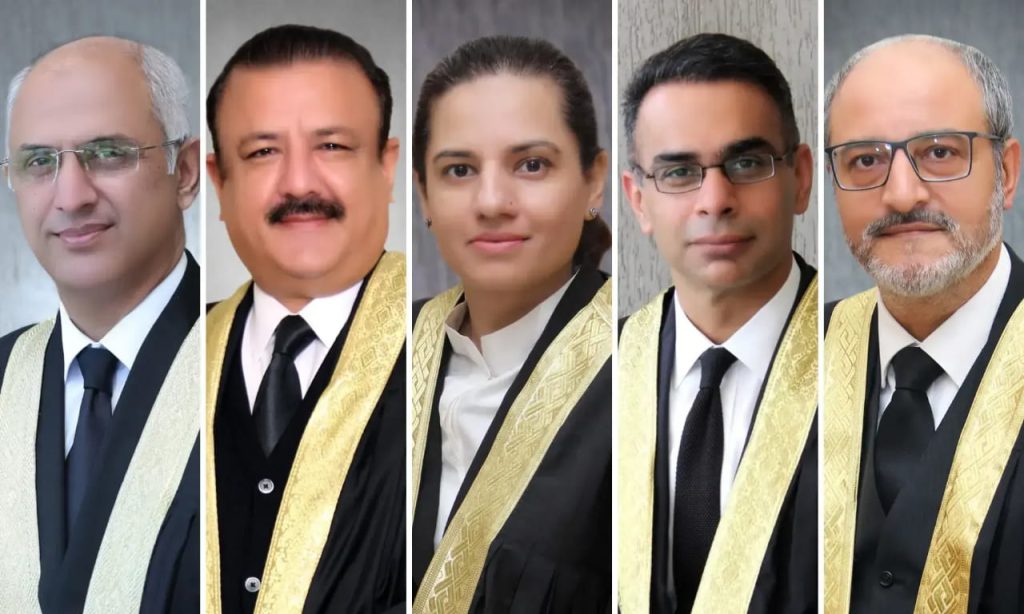
The intra-court appeal has been submitted by the following IHC judges:
Justice Mohsin Akhtar Kiyani
Justice Tariq Mehmood Jahangiri
Justice Babar Sattar
Justice Sardar Ejaz Ishaq Khan
Justice Saman Riffat Imtiaz
This is a rare instance where sitting high-court judges have taken their case to the Supreme Court against an administrative decision affecting the composition and hierarchy of their own court.
Key Objections Raised by the Judges
The petitioning judges have outlined several concerns in their appeal:
- Request to Recall the June 19 Verdict
They argue that the Supreme Court’s decision is inconsistent with constitutional principles and should be set aside in the interest of justice.
- Challenge to the Transfer Procedure
According to the judges, the transfers lacked essential constitutional safeguards and transparency.
- Dispute Over Seniority
Seniority is a defining factor in judicial promotions and leadership positions. The judges contend that the seniority formula applied to transferred judges is unfair and undermines the existing hierarchy within the IHC.
- Call for Interim Relief
The judges have requested interim orders to:
Suspend the administrative and judicial powers of the transferred judges
Halt implementation of the June 19 Supreme Court verdict until the appeal is decided
Constitutional Questions Raised
This case has triggered significant constitutional and structural concerns, including:
- Authority to Transfer High Court Judges
The majority ruling held that the President has constitutional authority to transfer high-court judges. The petitioners dispute this interpretation.
- Determination of Seniority
Should seniority be calculated from the original appointment date or the date a judge takes oath in a new court?
The answer could alter career trajectories and future appointments, including candidates for Chief Justice positions.
- Judicial Independence
Legal analysts warn that unchecked transfer powers may threaten judicial autonomy and open the door to potential misuse.
Why This Case Matters
This is not just a dispute over postings—it strikes at the core of:
Judicial independence
Separation of powers
The structure and functioning of high courts
The future of judicial career paths in Pakistan
A shift in how transfers or seniority are handled could reshape the judiciary for years to come.
What Comes Next?
The Supreme Court is expected to:
Fix a date for hearing the intra-court appeal
Consider interim relief
Examine whether the June 19 verdict should stand or be recalled
Decide the fate of the transferred judges’ administrative and judicial roles
The case is likely to remain a central focus of Pakistan’s judicial discourse in the coming weeks.