

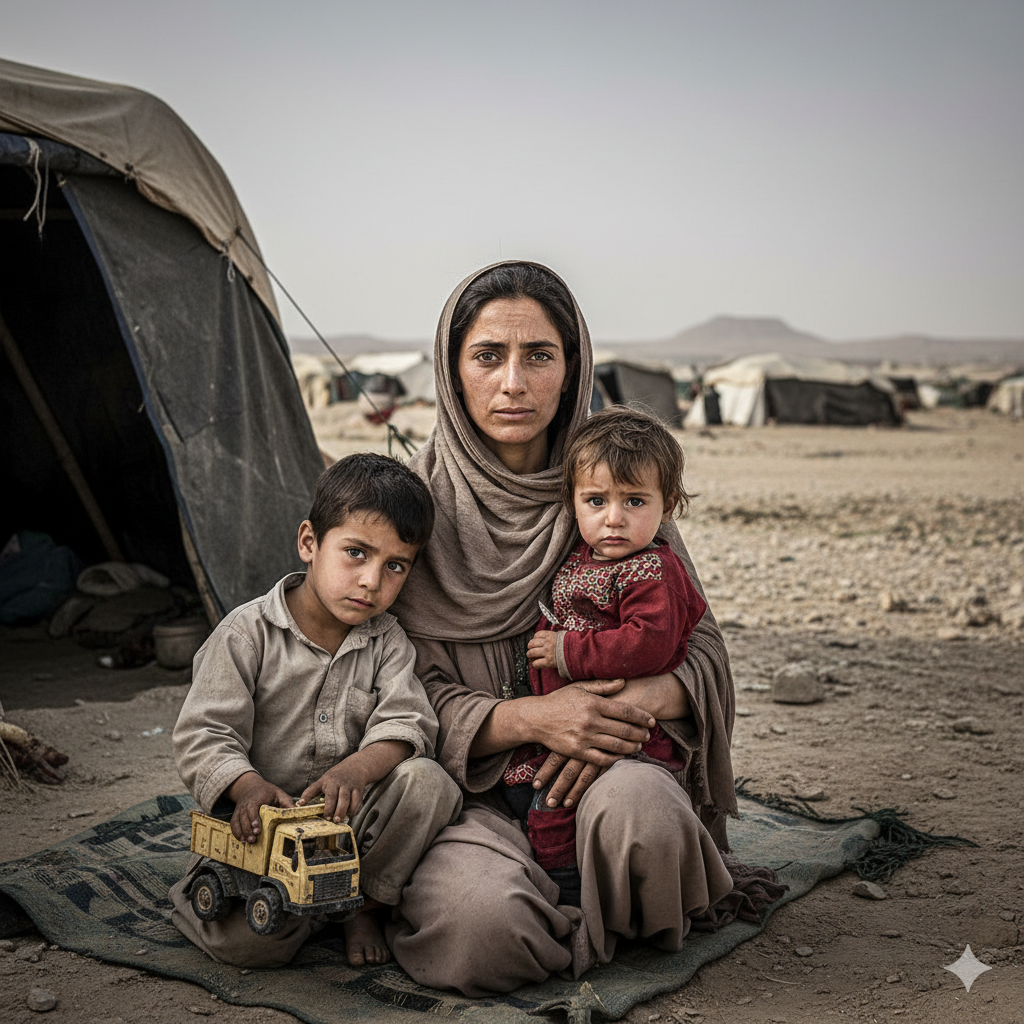
Introduction: Decades of Displacement
For decades, Pakistan has hosted one of the world’s largest refugee communities, a significant portion of which has originated from neighboring Afghanistan. This is not merely a political or economic issue; it is a human story of struggle, uncertainty, and resilience spanning over four decades. From the Soviet invasion in 1979 to the Taliban takeover in 2021, every crisis has pushed millions of Afghans toward Pakistan in search of safety.
Currently, millions of Afghan nationals reside in Pakistan, including registered refugees (Proof of Registration – PoR cardholders) and a large number of undocumented individuals. Their lives continue to oscillate between hope and constant precariousness.
1. Historical Context and Major Waves of Arrival
The arrival of Afghan refugees in Pakistan has largely occurred in three major waves, which have significantly impacted Pakistan’s social, political, and economic structure:
- 1979-1989 (Soviet Afghan War): This was the largest wave, as millions of Afghans crossed the border to escape Soviet forces. Pakistan widely sheltered them at the time.
- 2001 (US Intervention and Civil Strife): Ongoing conflict and instability, even after the fall of the Taliban, sustained the displacement.
- 2021 (Taliban Takeover): During this period, particularly women, girls, human rights activists, and minorities rapidly sought refuge in Pakistan due to fears over security and future uncertainty.
2. Current Challenges: Legal Uncertainty and Fear of Deportation
The biggest reality for Afghan refugees in Pakistan is instability and legal uncertainty, which has been further exacerbated by recent government policies.
⚖️ Legal and Documentation Issues
- Absence of Refugee Convention: Pakistan is not a signatory to the 1951 Refugee Convention, and therefore lacks a national refugee law. This deprives refugees of internationally recognized protection.
- Lack of Documentation: A large number of individuals live without any valid visa or identity papers, making them extremely vulnerable to police action and potential deportation.
- Limited PoR Card Protection: Even registered refugees (PoR cardholders) are often denied access to formal employment, property ownership, and complete legal protection.
🚪 The Pressure of Deportation and the New Visa Policy
- The “Illegal Foreigners” Plan and Expulsion: Starting in October 2023, the Government of Pakistan initiated a large-scale repatriation plan under which millions of undocumented Afghans have been pressured to leave the country.
- The Visa Requirement for Re-entry: Pakistani authorities have made it explicitly clear that those currently residing without valid documents must leave. If they wish to return to Pakistan, they will only be permitted legal re-entry after obtaining a proper visa from the Pakistani Embassy in Afghanistan. This policy presents a massive obstacle for individuals who have lived in Pakistan for years and have no established contacts or homes left in Afghanistan.
- Family Separation and Humanitarian Crisis: This policy is severely impacting families who have resided in Pakistan for decades. Fear of arrest and forced return is splitting families apart, as many members hold different documentation statuses or are undocumented.
🩺 Limited Access and Livelihood Struggles
- Access to Health and Education: Without valid documents, access to essential health services and education becomes difficult and dangerous. Many people fear visiting a doctor due to the risk of arrest.
- Livelihoods and Exploitation: The majority of refugees rely on daily wages in the informal labor market. The lack of documentation forces them to accept lower pay and face exploitation in the workplace.
3. Humanitarian Voices: Personal Stories and Emotional Burden
Behind these policies and statistics, every refugee holds a personal story that is a mix of resilience and fear.
📝 Example – A Teacher’s Hope: Many teachers and activists like Nazia had to flee in 2021 to protect their dreams and identity. While living in Pakistan, they are attempting to keep their culture and hope for the future alive by secretly teaching children in the community. For them, the struggle is not just about survival, but about preserving their identity.
📝 Example – Alienation in the Homeland: Many young Afghans who were born and raised in Pakistan have never visited Afghanistan. They considered Pakistan their home. Now, they are suddenly being sent to a country they do not know, where the language, culture, and security situation are entirely different. They often lament, “We are strangers in both countries.”
4. The Way Forward and International Responsibility
A coordinated, humane, and long-term solution is essential for the future of Afghan refugees.
- International Support: The international community must increase financial and technical assistance to Pakistan to prevent it from shouldering this humanitarian burden alone.
- Dignified Return/Resettlement: Return must be voluntary, phased, and dignified, respecting their human rights. The process for those promised resettlement in third countries must be urgently expedited.
- Support for Host Communities: Investing in development projects to alleviate the strain on public resources shared between refugees and host Pakistani communities.
Conclusion: A Future in Limbo
The life of an Afghan refugee in Pakistan is a complex tapestry of perseverance, hope, and constant uncertainty. The Pakistani government’s new and strict policies have brought them to a crossroads where they must either risk returning to the unknown or navigate a complex, often impossible, legal process. Until lasting peace is established in Afghanistan and the international community shares the responsibility, the future of millions of people will remain in limbo.